
Newsletter4 min read
Reasons for optimism (in the long-term)
Rate rises, a jittery US share market and talk of an AI bubble have left many investors feeling gloomy - here are some reasons for optimism about our portfolios over the long term.

Ashley
Principal Adviser, CFP®
Hi Everyone,
In the last few weeks I've had a number of meetings and calls with clients, and have noticed pessimism and gloom about the state of the world and the risks for our investment portfolios. These feelings haven't been helped by a further interest rate rise, to 4.85%, in Australia and sharp falls in US share markets following the Democratic party retaking both houses of congress in the midterm elections, which was perceived as bad for AI and data centre companies given the promise of regulation from many of the winning candidates (regulation usually reduces profits in the short term, hopefully for the benefit of society).
So, while I admit I can be accused of being cautious of the future sometimes, I thought I would outline some reasons for optimism for our portfolios, over the long-term at least.
The AI 'Bubble'
On Friday, US share markets fell 4% in a day, the largest fall since President Trump's tariff announcements in April 2025. This caused a lot of anxiety, was the bubble popping? At the time of writing, the S&P 500 had all but recovered those losses, meaning at least for now investors were happy to 'buy the dip' (and that includes Nvidia, the second largest company, being down 17% on news the Nvidia CEO had an affair with an alleged Chinese spy!).
I get this question a lot, is AI a bubble (like the dot.com bubble of 1995-2002)? I don't know the future, but I feel comparisons with the dot.com bubble aren't necessarily fair. While there are similarities, the key difference is some companies are generating revenue from their AI investments. In the dot.com bubble very few of them were actually profitable (or generating revenue at all). The concern with AI based companies is will they generate enough revenue to justify the Trillions of dollars of investment, especially where they've used debt to fund this investment.
There are clearly risks with AI and at some point there will be failures that cause a sharp downturn in financial markets. There will be companies that lose and potentially disappear, and if Chinese AI developers catch-up to the US models and undercut them on price that will impact financial markets too (think BYD taking market share from Tesla, due to lower prices).
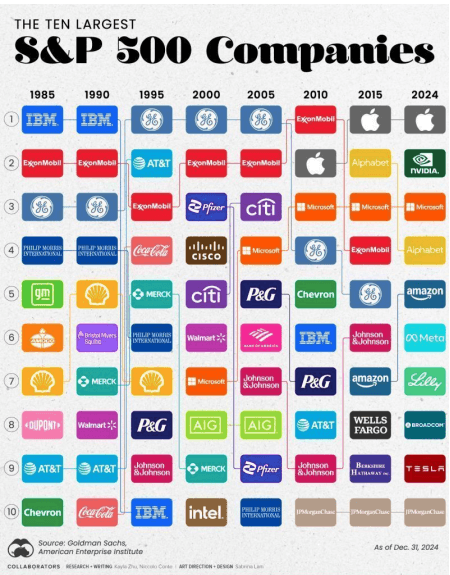
However if we're diversified, and patient, then long-term our portfolios will benefit from what is clearly a transformative technology. Below is a table showing the ten largest companies in the S&P 500 since 1985, US shares have returned 12.5% per annum over this time, despite all the new technologies and change.
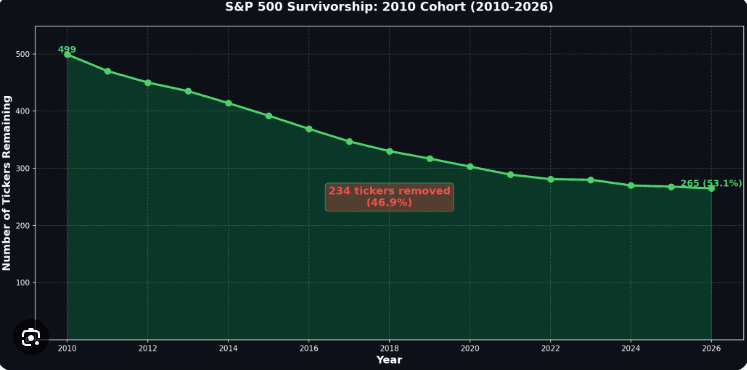
And in the chart below, you can see since 2010, nearly half the companies in the S&P 500 have been replaced. US shares have returned 16% per annum over this period. Even if say Alphabet (the parent company of Google and YouTube), disappeared (similar to Kodak for anyone over 40), the US market will still be full of growing companies.
What about wars, inflation, or even recession
There is no doubt Geopolitics has impacted our portfolios in 2026, in particular the war on Iran. This led to a rise in the price of Oil, which fed through the economy through higher fuel prices, which contributed to increased inflation, which has led to higher interest rates in Australia and overseas. Increasing interest rates is designed to reduce inflation by reducing spending and therefore slow economies down, which can lead to reduced returns on growth assets, like shares and property.
Reduced returns on shares and especially property, makes people feel poorer.
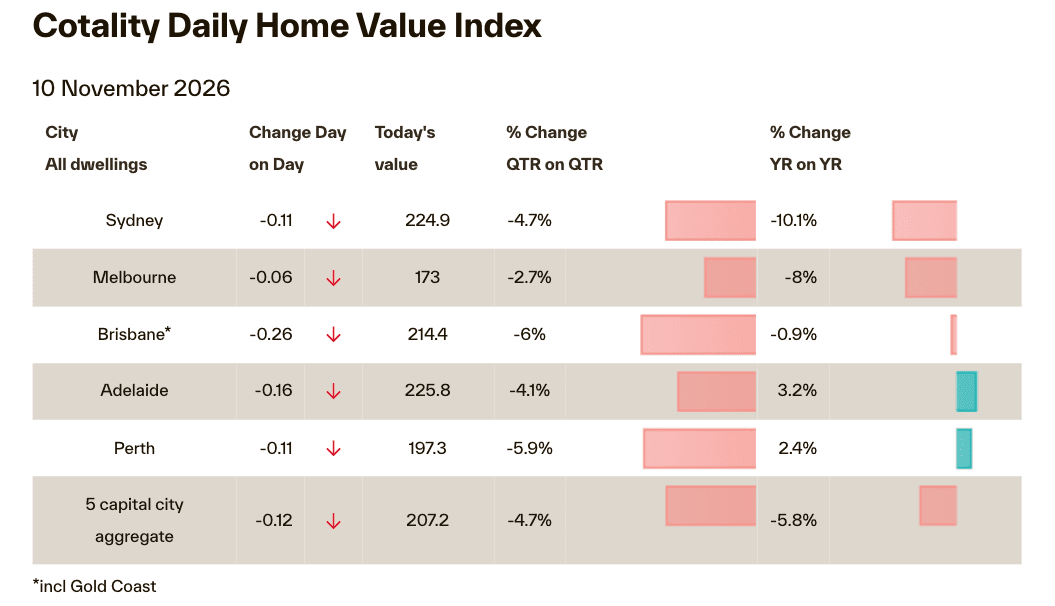
It's important to remember, Geopolitics can take away from our investment returns, but can also boost them. A solution to the Iran war would likely be very positive for investment markets, would lead to reduced oil prices and contribute to easing inflation, which puts less pressure on the need for increased interest rates. Even talk about having peace talks would have financial markets feeling a whole lot more positive, which would make us feel a lot better about our finances too.
So please, if you're feeling uncertain, remember to zoom out and look at the long-term, because if history tells us anything it is to be patient, better times (for our investments anyway), are likely ahead.
If you would like to discuss how this may impact you, your family or friends, please don't hesitate to reach out or pass my details on.
Want to talk through how this affects you?
Book an obligation-free 15 minute introductory call.
Book an Initial CallGet the next newsletter
New editions are sent by email when they're published.
Subscribe to the newsletter